Guide
Beginner
Uses BIGr
Uses BIGapp
Uses Qploidy2
+3
Start with your breeding question and choose a path through genotype preparation, genomic analysis, pedigree or ancestry assessment, and mating decisions.
Getting Started
Open guide →
Tutorial
Beginner
Uses BIGr
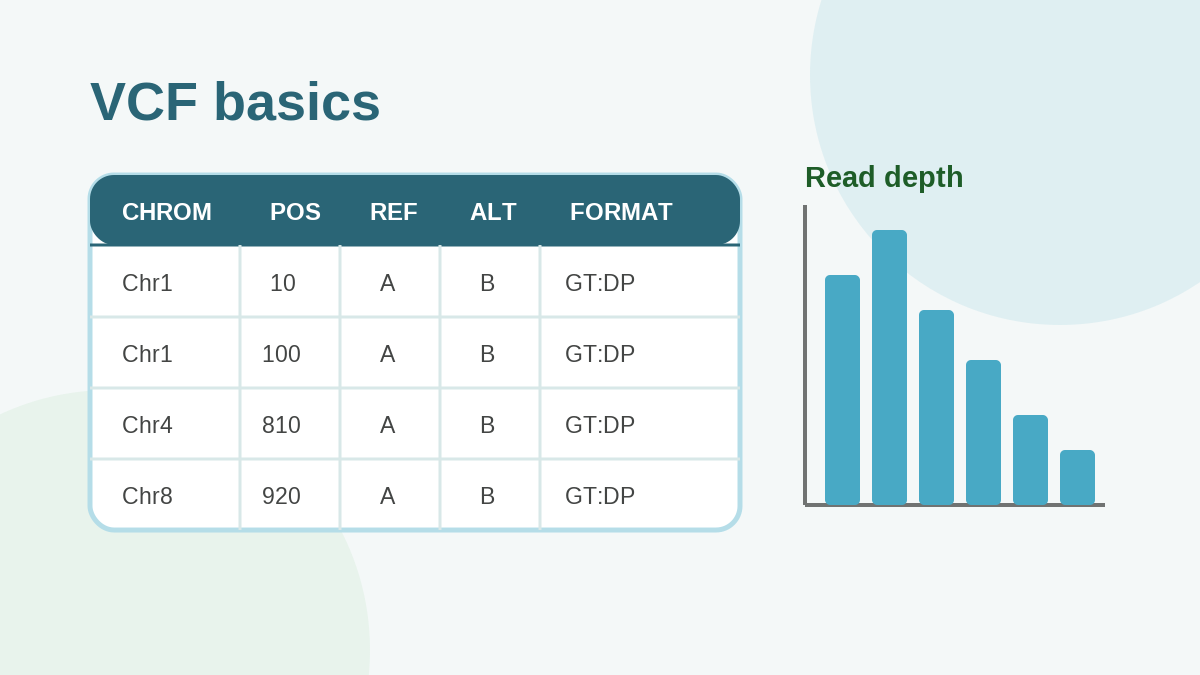
Set up R, then load, inspect, filter, and visualize a VCF with diploid- and polyploid-aware checkpoints.
Getting Started
Genotype Data
Open tutorial →
Concept
Beginner
Uses BIGr
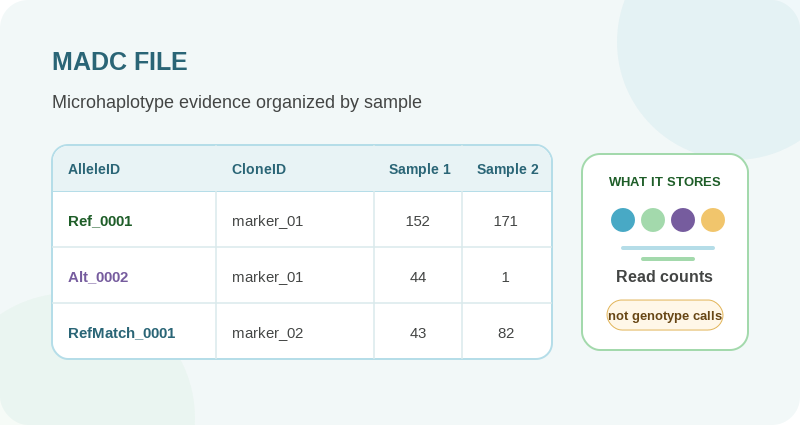
Understand how DArT MADC files represent microhaplotype read counts and how BIGr turns those counts into variant data.
Genotype Data
File Formats
Open concept →
Workflow
Intermediate
Uses BIGr
Use BIGr to recover biallelic read counts, call diploid or polyploid genotypes with Updog, and filter a validated VCF.
Genotype Data
Data Quality
Ploidy & Dosage
Open workflow →
Tutorial
External
Intermediate
Uses Qploidy2
Use Qploidy2 with DArTag data to estimate ploidy, aneuploidy, and large-scale copy-number variation.
Ploidy & Dosage
Genotype Data
Open tutorial ↗
Concept
Beginner
Uses BIGr
Uses Qploidy2
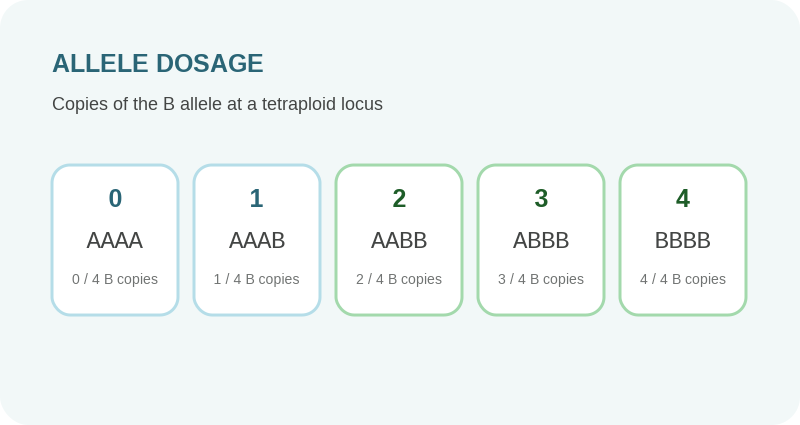
Understand what allele dosage represents in diploids and polyploids, how it differs from read fraction, and why dosage uncertainty matters.
Genotype Data
Ploidy & Dosage
Open concept →
Concept
Intermediate
Uses BIGr
Uses BIGapp
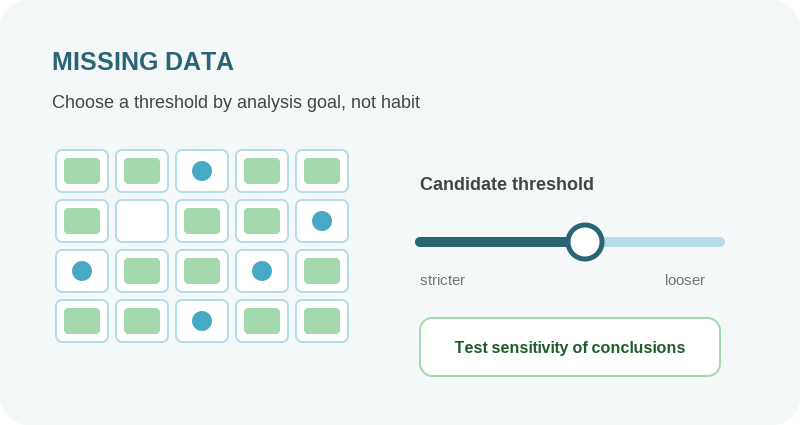
Choose marker and sample missingness thresholds by diagnosing the data source, matching the downstream analysis, and testing sensitivity.
Genotype Data
Data Quality
Open concept →
Concept
Intermediate
Uses BIGr
Uses BIGapp
Uses Qploidy2
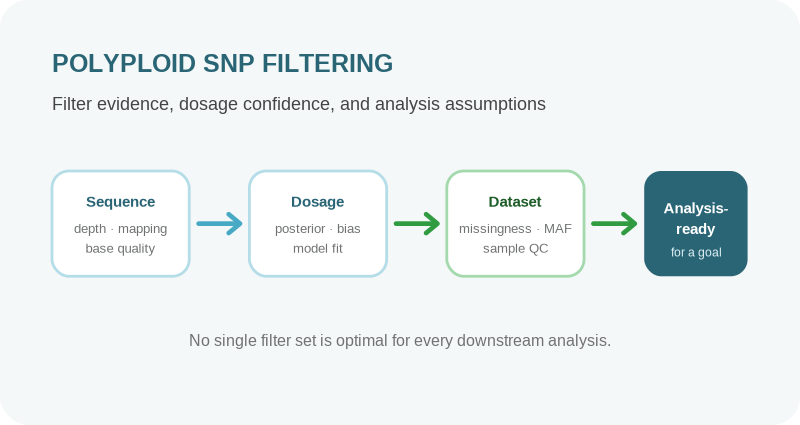
Build a polyploid-aware SNP filtering strategy that considers sequence evidence, dosage uncertainty, duplicated genomes, and downstream goals.
Genotype Data
Data Quality
Ploidy & Dosage
Open concept →
Concept
Beginner
Uses BIGapp
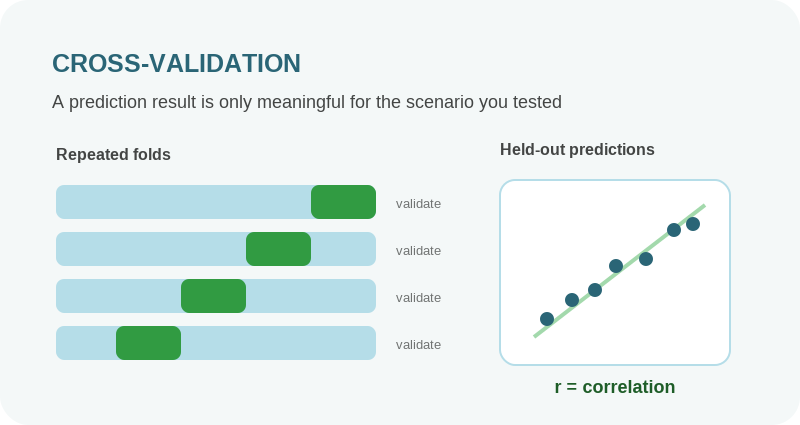
Interpret cross-validation results in genomic prediction without confusing predictive ability, selection accuracy, and the realism of the validation design.
Genomic Prediction
Data Quality
Open concept →
Concept
Beginner
Uses BIGpopA
Uses Familia
Understand the difference between testing recorded parents and searching a candidate-parent pool with SNP genotype data.
Pedigree & Parentage
Genotype Data
Open concept →
Tutorial
Beginner
Uses BIGpopA
Use a worked SNP dataset to clean a pedigree, validate recorded parent-offspring trios, and search candidate parents with BIGpopA.
Pedigree & Parentage
Genotype Data
Open tutorial →